
The Top 5 Non-Compliance Issues Found in Waterloo Cafes
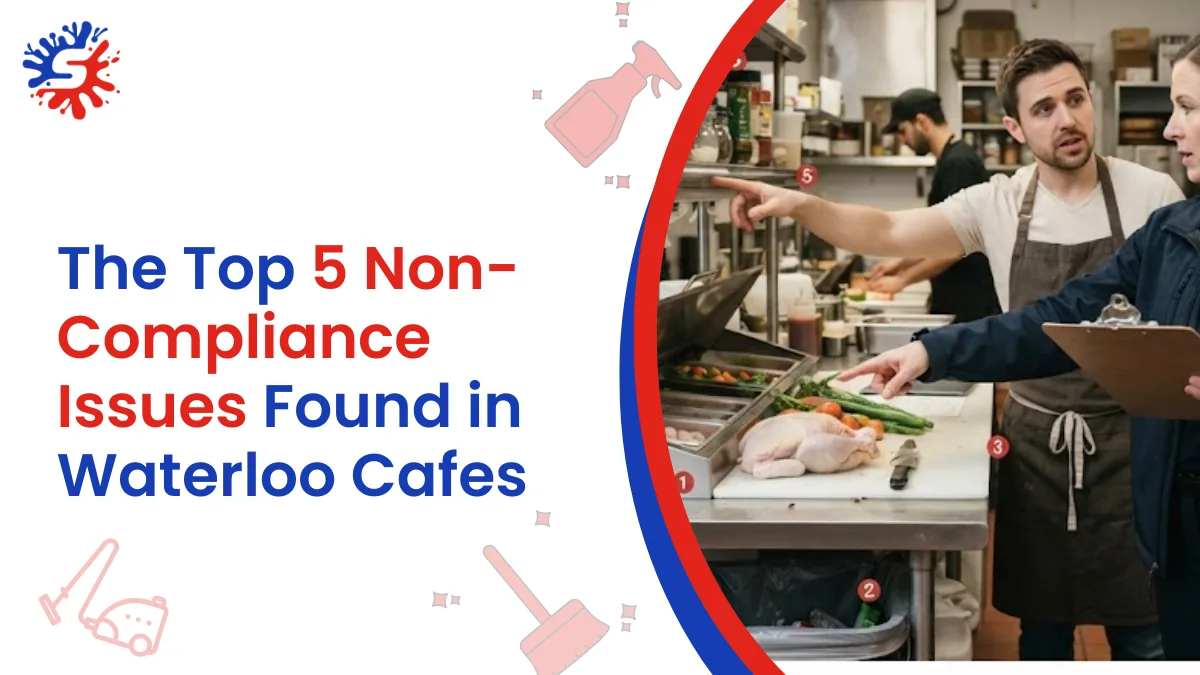
Waterloo's cafe strip has boomed in recent years, but growth has brought fiercer scrutiny from NSW Food Authority. Waterloo cafes sit squarely inside that enforcement zone.
This guide breaks down the five non-compliance issues inspectors flag most often locally, what they cost cafe owners in fines and lost customers. Furthermore, we will look into how a structured commercial cleaning routine closes most of these gaps before an inspector ever walks through the door.
Key Takeaways
- Temperature control failures in the 5°C–60°C danger zone are one of the most common and easily preventable breaches in café kitchens
- "Failure to maintain fixtures, fittings and equipment to the required standard of cleanliness" is the most frequently issued penalty wording for Sydney cafes
- High-risk breaches involving vermin or unsafe chemicals attract penalties of up to $1,100 and can trigger a public "Name and Shame" listing
- A lapsed Food Safety Supervisor certificate or gaps in staff training undermine every other compliance effort
- Dirty hospitality venues can permanently lose up to 30% of regular customers once trust is broken
- A scheduled, checklist-based professional clean is one of the most cost-effective ways to stay ahead of Scores on Doors inspections
Why Food Safety Compliance is a Bigger Deal Than Most Cafe Owners Think
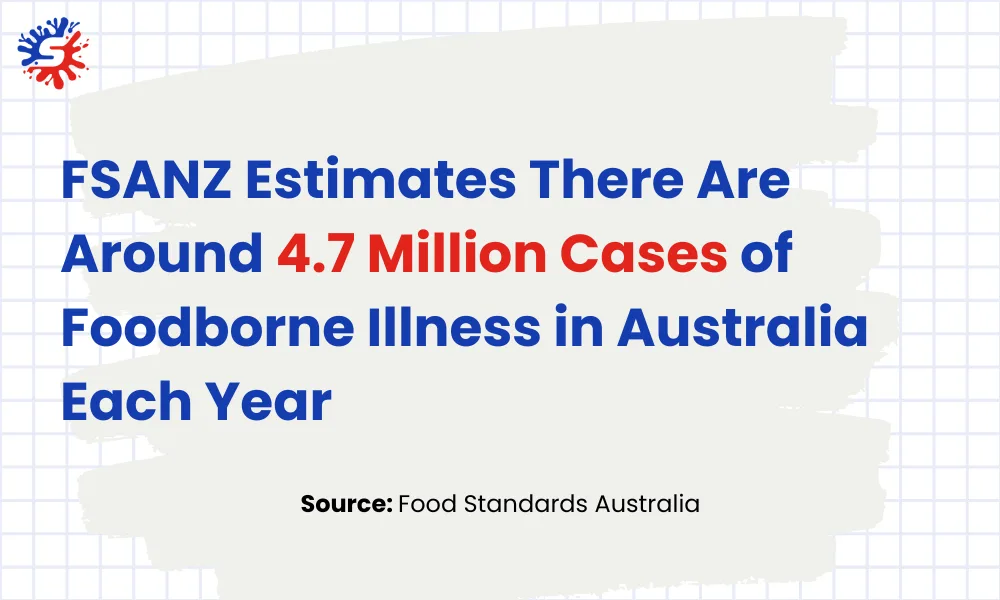
Unsafe food is a public health issue with a price tag. FSANZ estimates there are around 4.7 million cases of foodborne illness in Australia each year, causing about 47,900 hospitalisations and 38 deaths. FSANZ also puts the annual economic cost of foodborne illness in Australia at roughly $3 billion, most of it from lost workforce productivity rather than medical bills.
Cafes sit at the pointy end of this risk because they handle high volumes of food like milk, eggs, cut fruit, and sandwich fillings, with fast turnover and tight kitchen space.
A single Scores on Doors inspection under the FPAR checklist can turn a thriving cafe into a cautionary tale on social media within hours. As our breakdown of kitchen hygiene statistics shows, the gap between a well-run kitchen and a non-compliant one usually comes down to a handful of repeatable habits rather than a single catastrophic failure.
Issue 1: Poor Temperature Control
Temperature control failures are consistently among the most common breaches inspectors record in cafe kitchens, because busy service periods make it easy for milk jugs, sandwich fillings, and cabinet food to drift outside safe limits without anyone noticing.
The 5°C– 60°C Danger Zone
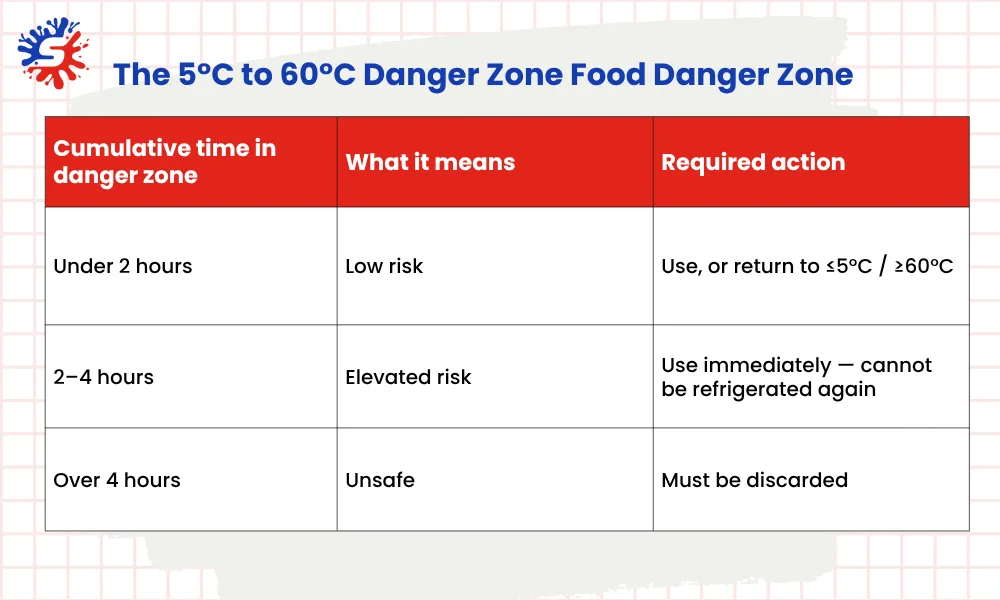
Under the Food Standards Code, food must be kept at 5°C or below, or 60°C or above. Between those temperatures, bacteria such as Salmonella, Listeria, and E. coli can multiply in minutes. Councils apply the 2-hour/4-hour rule to determine what happens to food that has been in that zone.
Where cafes typically slip up:
-
Milk jugs and cream left on the espresso bench for an entire service rather than being cycled back to the fridge
-
Grab-and-go cabinets running above 5°C because door seals are worn or the cabinet is overstocked and airflow is blocked
-
No calibrated probe thermometer on site, or one that has never been checked against ice water or boiling water
-
Reheated food (soups, pies) not reaching 60°C throughout before hot-holding
Issue 2: Cleaning and Sanitising Failures
This is the single most common wording inspectors use in penalty notices issued to Sydney cafes. Penalty amounts for this category of breach have ranged from a few hundred for minor record-keeping up to thousands for high-risk breaches involving vermin, unsafe chemicals, or repeat non-compliance.
A cafe in Redfern, inside the same City of Sydney enforcement area as Waterloo, was fined $880 for exactly this offence after a prior warning, and a North Sydney cafe received the identical penalty for equipment cleanliness failures.
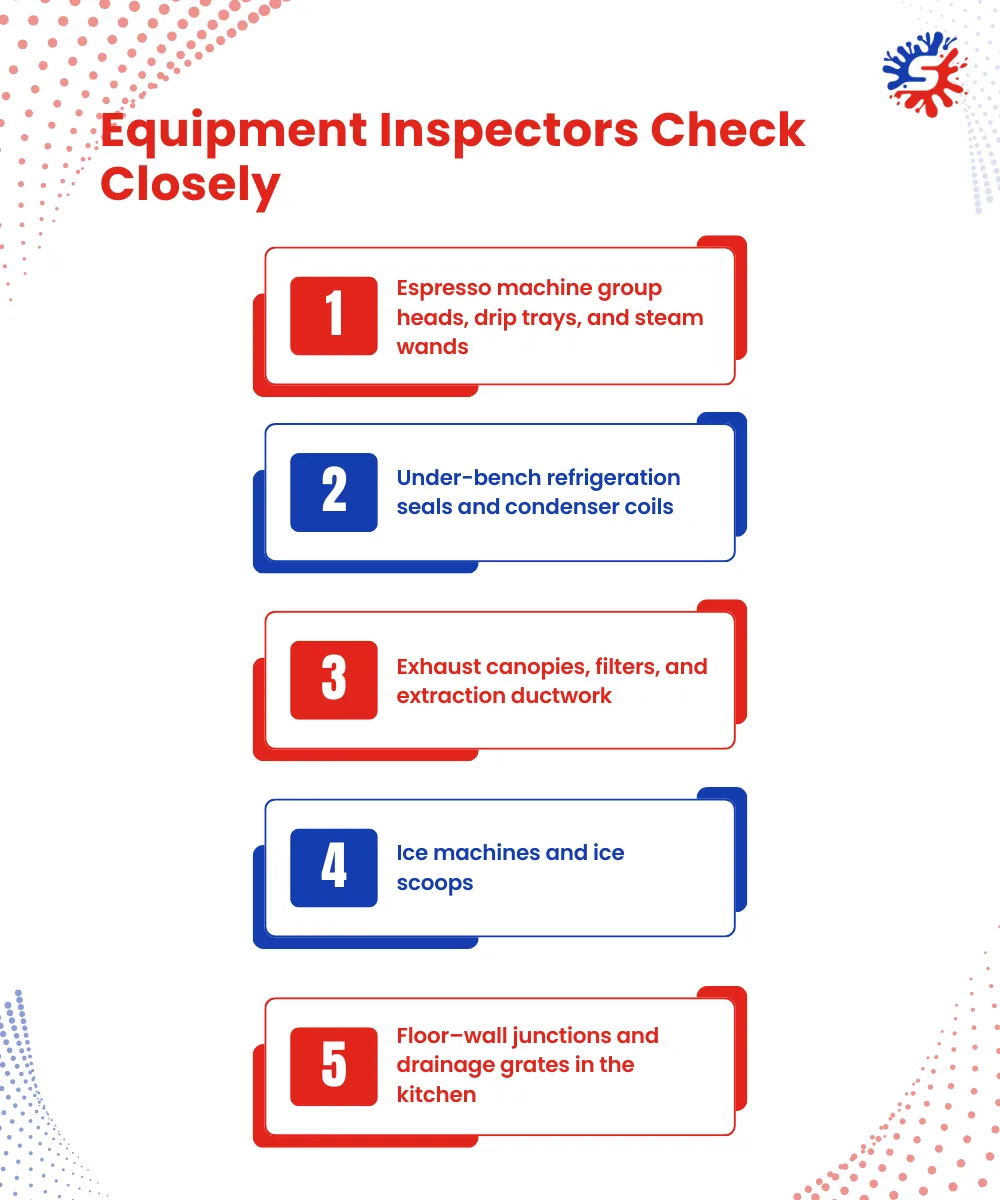
Grease build-up behind espresso machines, mould in ice machine seals, and grime trapped in extraction hood filters are the usual culprits. They build up because daily front-of-house cleaning doesn't reach the equipment underneath and behind fixed appliances. Our piece on why Sydney offices are investing over $20 billion in hygiene standards covers a similar pattern: the areas that get skipped in a rushed daily wipe-down are exactly the areas inspectors check first.
Issue 3: Cross-Contamination Between Raw and Ready-to-Eat Food
Small cafe kitchens often prepare raw meat, dairy, and ready-to-eat items like sandwiches and salads within arm's reach of each other. Without strict separation, cross-contamination becomes almost inevitable during a busy morning rush.
Common breach patterns inspectors record include:
-
Using the same chopping board or knife for raw protein and ready-to-eat garnish without sanitising between uses
-
Storing raw meat above ready-to-eat food in the fridge, allowing drip contamination
-
Bare-hand contact with ready-to-eat food instead of using tongs, gloves, or utensils
-
Reusing cleaning cloths between raw prep and front-of-house surfaces
Issue 4: Pest Control and Vermin Management Gaps
Vermin-related non-compliance sits at the top end of the penalty scale because it represents an immediate, visible food safety risk rather than a procedural gap. Penalty notices for breaches involving vermin, unsafe chemicals, or repeated non-compliance are treated as high-risk and attract the maximum penalty tier. Inner-city Sydney suburbs like Waterloo carry higher baseline pest pressure than suburban strips, simply due to density, waste storage constraints, and the concentration of food businesses along a single street.
What Attracts Pests to a Cafe Kitchen
-
Grease trap and bin store areas that aren't cleaned on a fixed schedule
-
Cardboard and packaging left to accumulate near the back door
-
Gaps around pipework, skirting, and door seals that go unnoticed during routine cleaning
-
Dry goods stored in open packaging rather than sealed containers
Issue 5: Missing or Inactive Food Safety Supervision and Staff Training
Every food business handling potentially hazardous food in NSW must have a trained Food Safety Supervisor with a current certificate on the premises, and staff need the skills and knowledge to handle food safely. In cafe settings with high staff turnover, it's common for the FSS certificate to lapse, or for new hires to start serving food before their induction covers hygiene basics.
This issue compounds the first four: a well-trained team is what actually keeps temperature logs current, cleaning schedules followed, and cross-contamination habits in check day to day. It's the same principle behind the $250 weekly clean that lifted growth and retention at a Waterloo gym.
What Non-Compliance Actually Costs Waterloo Cafe Owners
The financial exposure goes well beyond the penalty notice itself. As of July 2026, 760 Sydney-based establishments have been fined. Businesses that receive a penalty notice and don't challenge it are also listed on the Authority's public "Name and Shame" register for up to a year.
That reputational risk is real and measurable. As we've written about pubs permanently losing regular customers in Sydney's CBD, hospitality venues rarely get a second chance with a customer who's had a bad hygiene experience.
How Professional Cleaning Closes These Gaps Before an Inspector Arrives
Most of the five issues above are prevented in the same way: a documented, scheduled cleaning routine that covers equipment and fixtures inspectors specifically check, not just the front-of-house areas customers see. This is the same logic behind the ROI we've documented: why every dollar spent on cleaning returns your value.
A compliance-focused clean for a cafe typically covers:
-
Deep cleaning of espresso equipment surrounds, under-bench fridges, and exhaust canopies on a fixed schedule
-
Grease trap surrounds, bin store areas, and floor–wall junctions where pests are most often attracted
-
Sanitising of high-touch prep surfaces separate from raw-food handling zones
-
Photo-verified, checklist-based reporting that your Food Safety Supervisor can keep on file as evidence of due diligence
Conclusion
Ensuring compliance is the foundation of trust that keeps your customers coming back and your doors open for the long haul. By shifting your approach from reactive, last-minute tidy-ups to a structured, audit-ready cleaning routine, you transform food safety from a daunting regulatory hurdle into a seamless part of your daily operations.
Ready to safeguard your reputation and pass your next inspection with confidence? Contact our team at Spark Clean Australia today. We specialize in compliance-focused commercial cleaning tailored for Sydney cafes, providing the photo-verified, checklist-based reporting you need to stay audit-ready 365 days a year.
Frequently Asked Questions
Find quick answers to booking, payments, pet-friendly policies, deep cleaning, and more. Our team is dedicated to making the process effortless and transparent. If you have additional questions, we're here to help ensure a seamless experience.
Get In Touch